
In 2026, the agents who win on Instagram aren’t posting more—they’re posting smarter. Generic “Just Listed” graphics and recycled captions don’t hold attention anymore, and attention is the first step toward trust. If your content doesn’t stop the scroll, it never gets the chance to build a relationship.
The good news is you don’t need to reinvent your marketing. You just need better angles. When your posts focus on real stories, specific outcomes, and local relevance, your content naturally becomes more interesting—and more effective at attracting the right buyers and sellers.
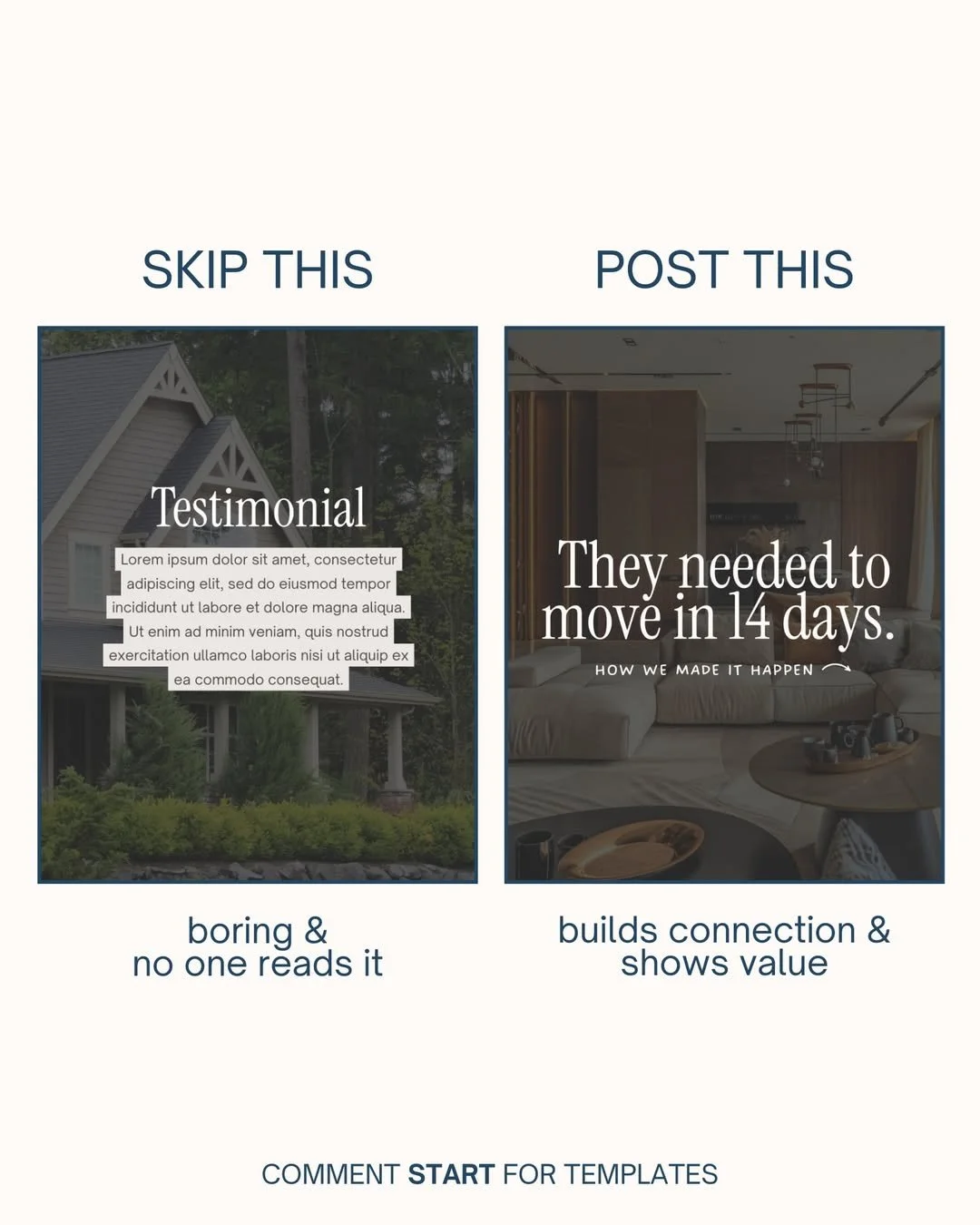
Turn Testimonials Into Mini Case Studies
Long, text-heavy testimonials rarely stop someone mid-scroll. Praise without context feels vague, and vague content gets ignored. What makes people pay attention is process, stakes, and results.
Instead of posting a generic quote, turn the experience into a short story. Show what the client was dealing with, what changed, and how you helped them get there. When you do this, you position yourself as a problem-solver rather than just someone who was “great to work with.”
Try framing posts like:
“They needed to move in 14 days. Here’s how we made it happen.”
“This home sat for 6 months… then we repositioned it.”
“Out-of-state buyers, 2 virtual tours, under contract in 9 days.”
Now your content creates curiosity. It shows your thinking. It proves your value without you ever needing to say it outright. When you shift from praise to proof, your posts start doing the selling for you.
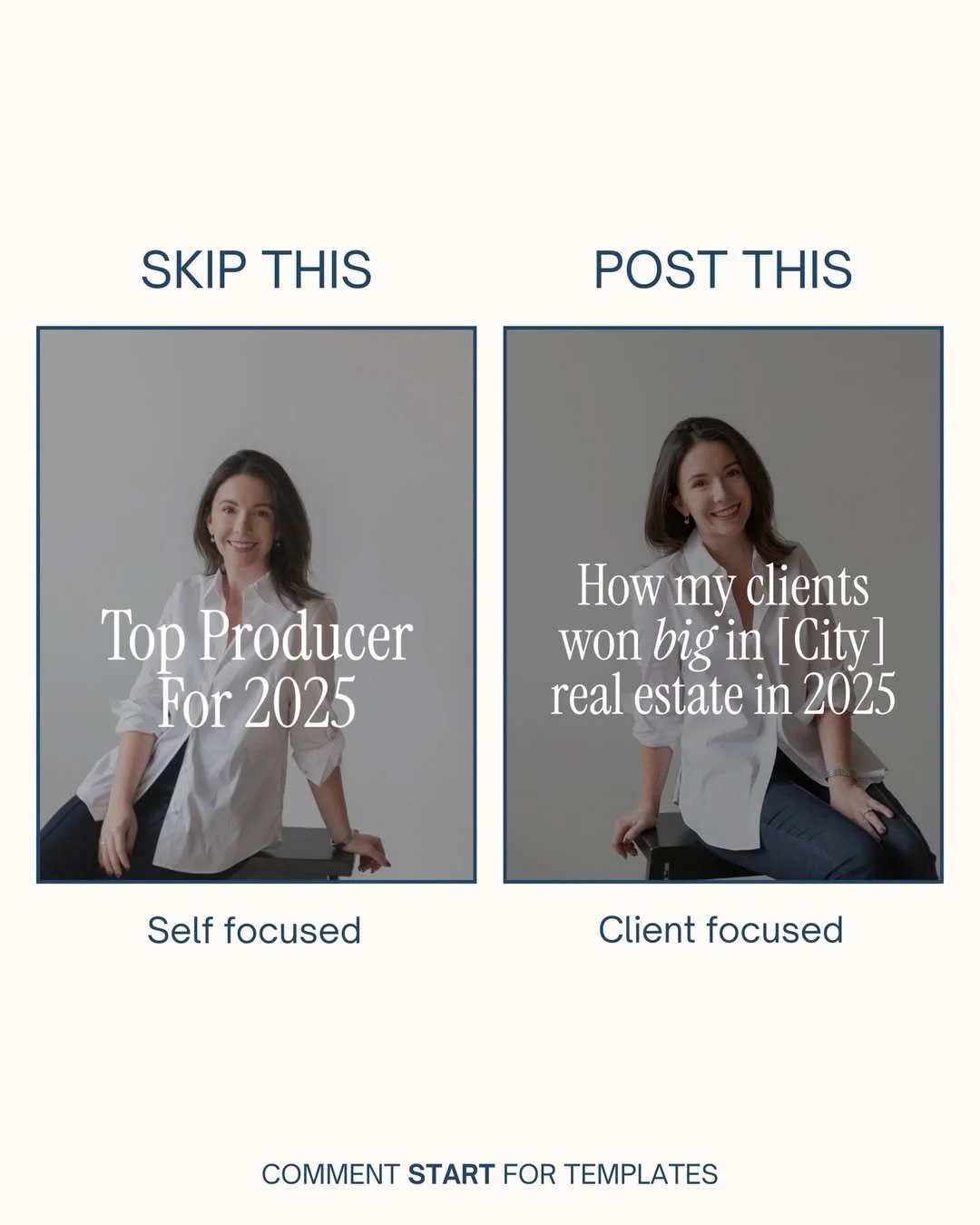
Make Awards About Your Clients, Not You
Awards and rankings are meaningful milestones, but they don’t mean much to strangers scrolling quickly. A “Top Producer” graphic talks about you. A client-focused angle talks about results—and results are what actually earn attention and trust.
Instead of centering the spotlight on your title, flip the narrative to focus on what your clients achieved with your help. This reframing instantly makes your success relevant to the person reading it.
For example, instead of:
“Top Producer 2025”
try:
“How my clients won big in [City] real estate in 2025.”
Then share two or three short stories, lessons, or smart moves your buyers or sellers made. This positions you as the guide who helps people succeed, not just the agent collecting accolades. People don’t hire the most decorated agent—they hire the one who makes them feel like they can win too.
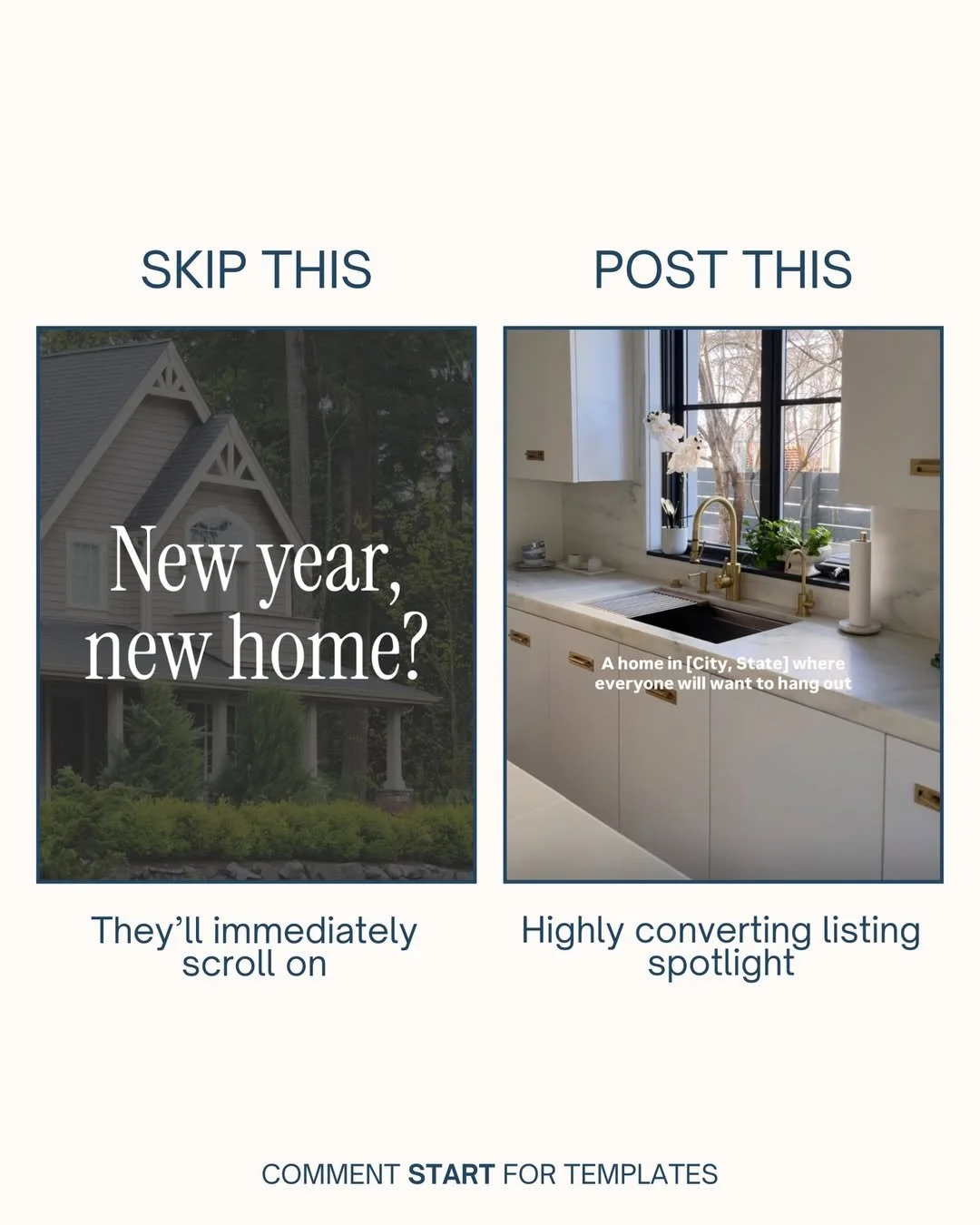
Replace Generic Hooks With Lifestyle Moments
“New year, new home?” feels like background noise. It’s overused, predictable, and doesn’t give anyone a reason to stop scrolling. Generic questions rarely create emotional engagement.
Instead, paint a specific lifestyle moment. Help people picture themselves in the space before you ever talk about features or stats.
A hook like, “A home in [City, State] where everyone will want to hang out,” is far more powerful because it sells a feeling. A gathering place. A lifestyle upgrade. That’s what makes someone pause and imagine themselves there.
When writing listing hooks, aim for:
A vibe (cozy, social, peaceful, impressive)
A moment (hosting friends, quiet mornings, family dinners)
A clear location anchor ([City], [Neighborhood])
Generic questions get scrolled past. Specific lifestyle scenes get saved, shared, and sent to partners and friends.
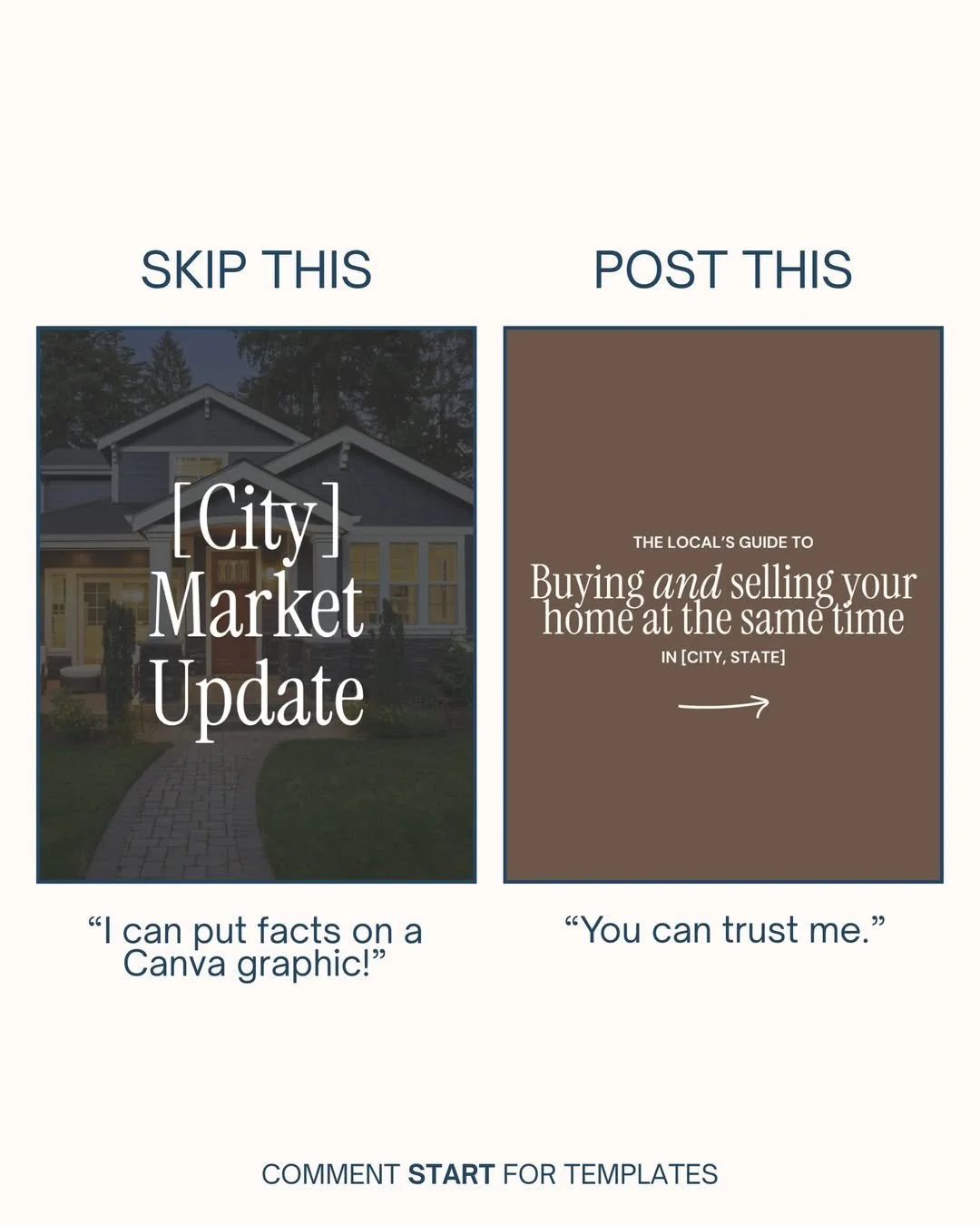
Turn Market Updates Into Practical Guides
“City Market Update” sounds informative, but it often feels like homework. Most people scroll past statistics unless they’re already deep into buying or selling. Raw numbers alone don’t spark curiosity.
Instead, frame your content around real-life situations your audience is stressed about. For example, “The Local’s Guide to Buying and Selling Your Home at the Same Time in [City, State]” instantly feels more useful and human.
This approach works because it speaks directly to a specific problem. It shows you understand the emotional and logistical challenges behind the move, not just the data. It also signals local expertise without you having to declare it outright.
Stats prove you’re informed. Practical guides that solve real problems make people trust you.
Swap Broad Tips for Local Insight
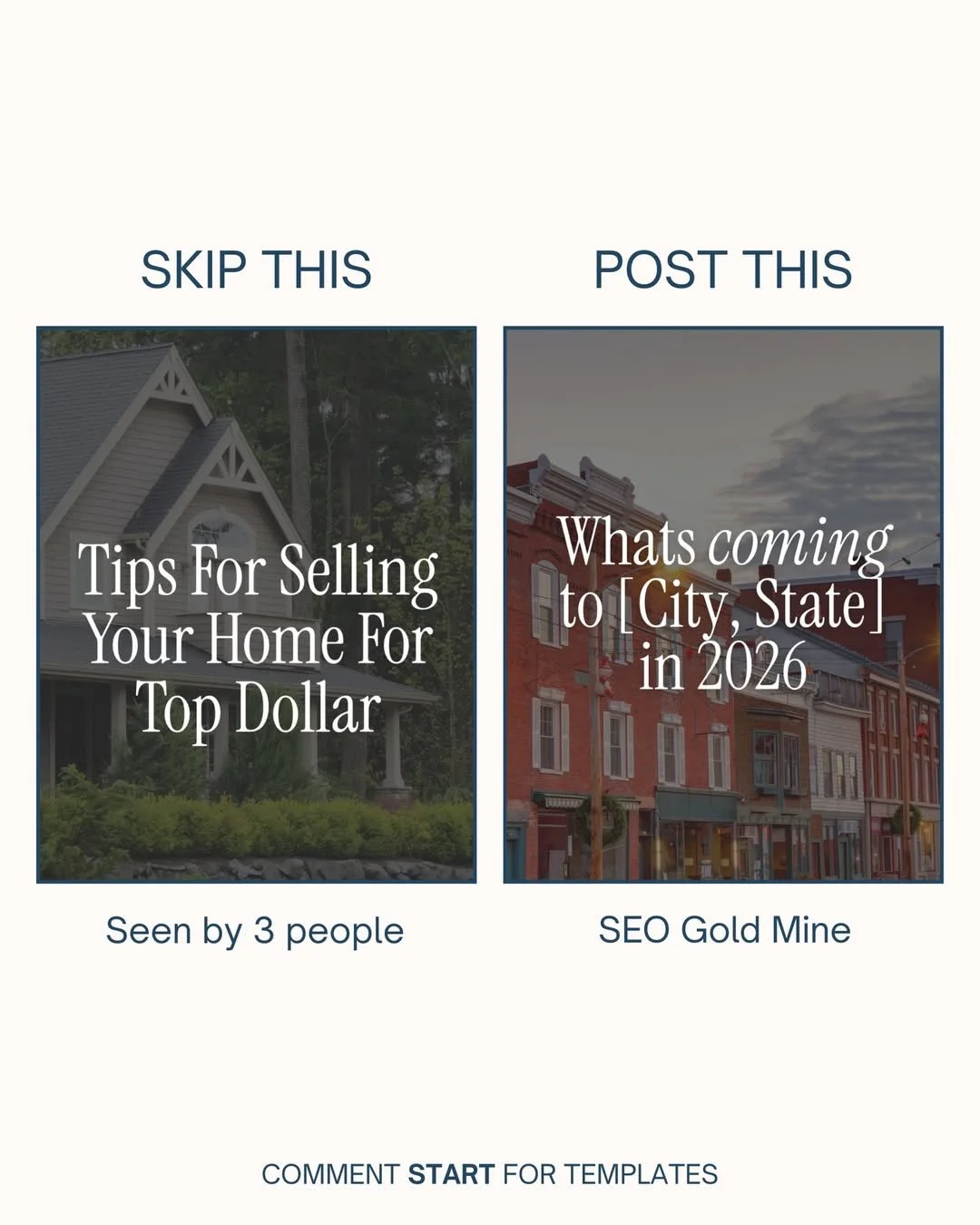
“Tips for selling your home for top dollar” is helpful—but it’s also something people have seen countless times. Broad advice feels interchangeable and easy to ignore.
Now compare that to, “What’s coming to [City, State] in 2026.” That headline triggers curiosity and local pride at the same time. You’re no longer just giving advice—you’re positioning yourself as the person who knows what’s happening before everyone else does.
This works especially well because it ties into how people search online. When someone looks up “moving to,” “living in,” or “new in,” they’re looking for local insight, not generic guidance. By creating content that highlights developments, events, or changes in your area, you become the go-to insider.
General tips get saved occasionally. Local insight gets searched, shared, and remembered.
The Strategy Behind All of This
Every example here follows the same principle: make your content about the viewer, not just the information. When your posts tell stories, solve problems, or highlight local life, they feel relevant instead of promotional.
This shift doesn’t require more time—it requires more intention. Instead of asking, “What should I post today?” ask, “What would my ideal client actually find interesting or useful right now?” That’s where the best content ideas come from.
With Agent Toolkit, you don’t have to come up with these angles from scratch—it provides done-for-you templates and post ideas built around stories, lifestyle, and local relevance so your content consistently attracts the right clients.
The Posts That Win in 2026
In 2026, Instagram success for realtors isn’t about volume. It’s about resonance. Stories beat slogans. Context beats announcements. Local insight beats generic advice.
When your content consistently sparks curiosity, shows your thinking, and highlights the life your market cares about, your posts stop feeling like marketing and start feeling like value. That’s what builds trust—and trust is what turns followers into clients.